

Human papillomavirus enters the body without a single symptom, and most people will encounter it at least once. This guide walks through how it spreads, what it can look like, and why immune strength decides almost everything that happens next.
Table of Contents
Inside the Invasion: How HPV Enters the Body Unnoticed
Human Papillomavirus Types and Genotypes
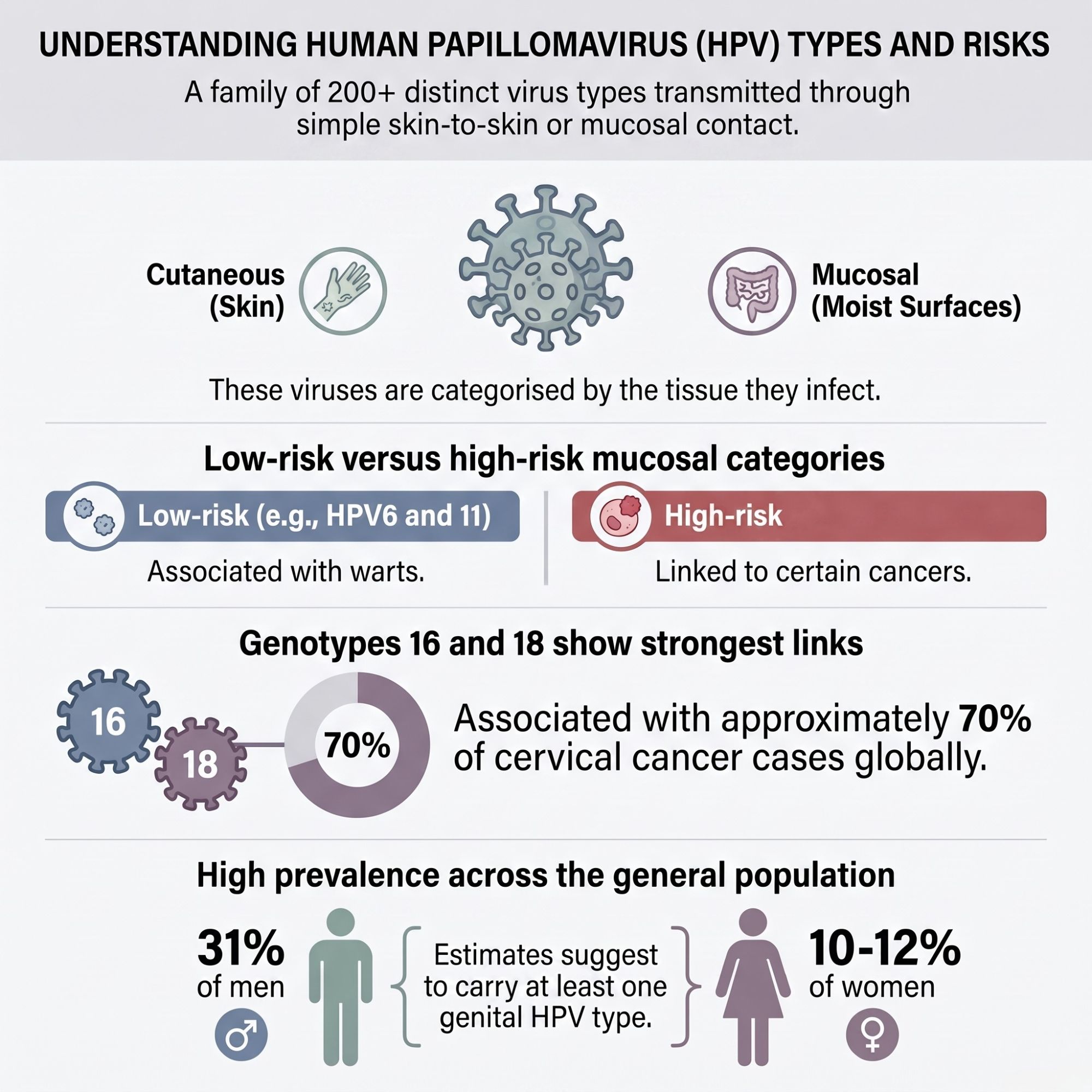
- Cutaneous types, which establish themselves on ordinary skin and cause common warts on hands or feet
- Mucosal types, which infect moist surfaces such as the genitals, mouth, or throat
Low-Risk vs High-Risk HPV Types: What Is the Difference?
Mucosal HPV types split further into two risk categories, and this distinction matters more than the sheer number of types.
Risk group | Common genotypes | Typical outcome |
Low-risk | HPV6, HPV11 | Genital warts, rarely cancer |
High-risk | HPV16, HPV18, plus 31, 33, 45, 52, 58 | Linked to cervical and other cancers |
Human Papillomavirus in Women and Men
Human Papillomavirus Transmission: How Is HPV Spread?
- Hand-to-genital transfer, documented in both sexes
- Mother-to-child transmission during birth, estimated at around 20 percent of cases in one study
- Contaminated medical instruments or surfaces, though evidence here remains mostly indirect
Do Condoms Stop HPV Spread?
How Long Can Someone Unknowingly Carry and Spread HPV?
What Increases the Chance of Catching or Passing On HPV?
Factor | Effect on risk |
Higher number of sexual partners | Strongest and most consistent driver of risk |
Partner with multiple partners | Raises exposure independently of one’s own history |
Weakened immune defences (HIV, low CD4 count) | Increases both acquisition and persistence |
Smoking | Acts mainly on persistence, not just exposure |
Human Papillomavirus Signs: What HPV Warts Look Like and Where They Appear
What Are the Symptoms of HPV in Women and Men?
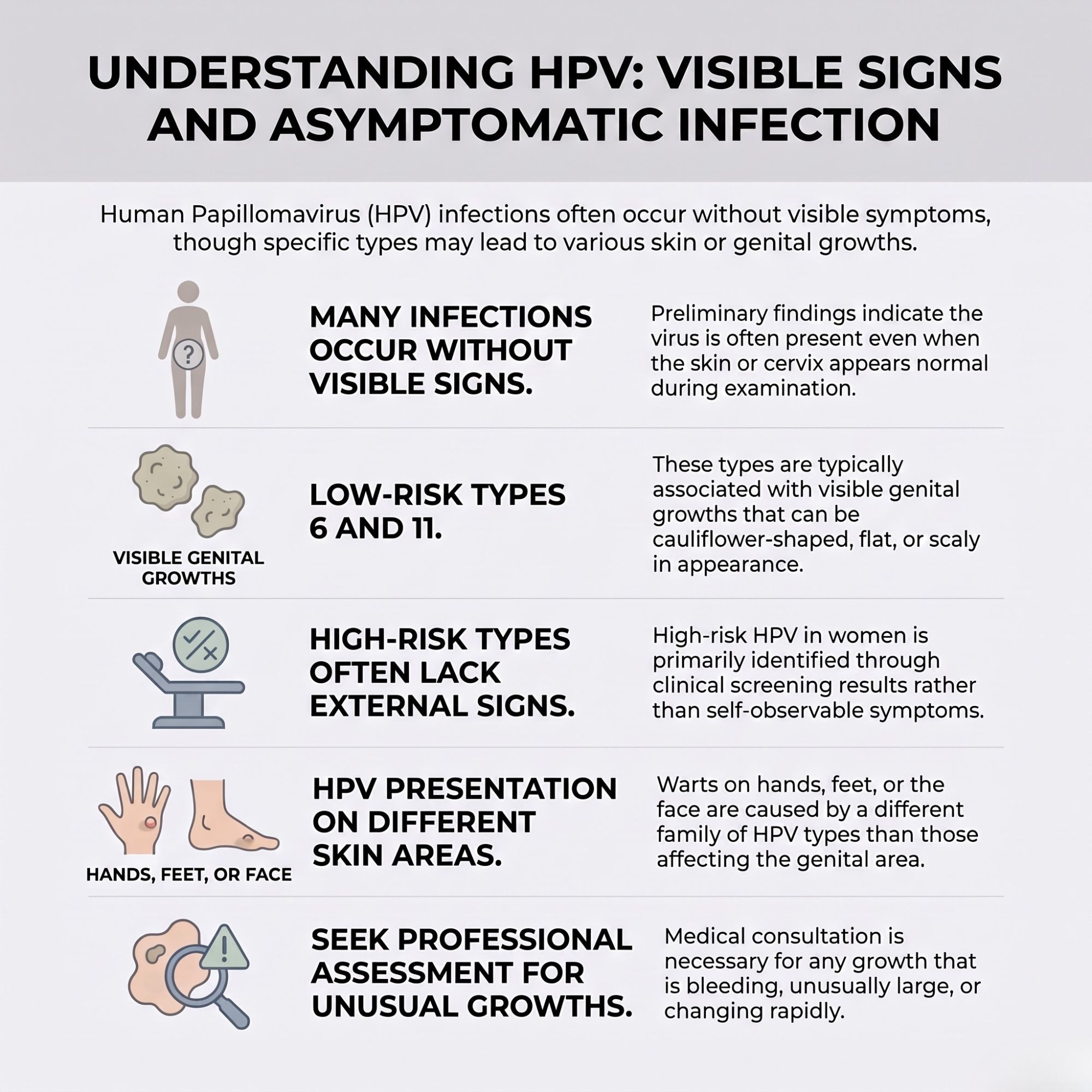
- Soft, raised, cauliflower-shaped
- Sometimes flat or scaly instead of bumpy
- Ranging from flesh-coloured to brown, red, or even purple
- Found on the vulva, perineum, and groin in women, or on the penis, scrotum, and groin in men
HPV on Skin: Warts on Hands, Feet, and Face
- Common warts on fingers, knuckles, knees, and elbows, rough and raised, sometimes dotted with tiny black points from damaged blood vessels
- Flat warts on the face or hands, smooth, barely raised, easy to overlook
- Plantar warts on the sole of the foot, dense and firm, the type most likely to cause real discomfort
Is Human Papillomavirus an STD? What a Positive Test Means
Human Papillomavirus in Mouth: How Common Is Oral HPV?
- Oral sex, the strongest and most consistent risk factor identified across studies
- Deep kissing, linked to higher risk in some cohorts, though evidence here is less uniform
- Smoking and poor oral hygiene, both repeatedly tied to higher prevalence
Does Genital Human Papillomavirus Infection Mean Oral Infection Too?
Does HPV Go Away on Its Own? The Immune System's Hidden Battle


Why Does the Body Struggle to Notice HPV?
- Innate immunity reacts first, but slowly and weakly: it often misses the early window altogether
- Adaptive immunity does the real work: specific immune cells coordinate the response, while others eliminate infected cells one by one
- Antibodies play only a minor role here: the heavy lifting happens at the cellular level, not through circulating antibodies
- The HPV vaccine flips this balance: it triggers a far stronger antibody response than a natural infection ever does, which is why it prevents new infection but cannot treat one already established
What Helps the Body Clear HPV Faster?
- Not smoking, since smoking is repeatedly tied to slower clearance
- Staying physically active
- In women, a healthy vaginal microbiome dominated by Lactobacillus bacteria
Can HPV "Come Back" After It Has Cleared?
Human Papillomavirus Infection Treatments
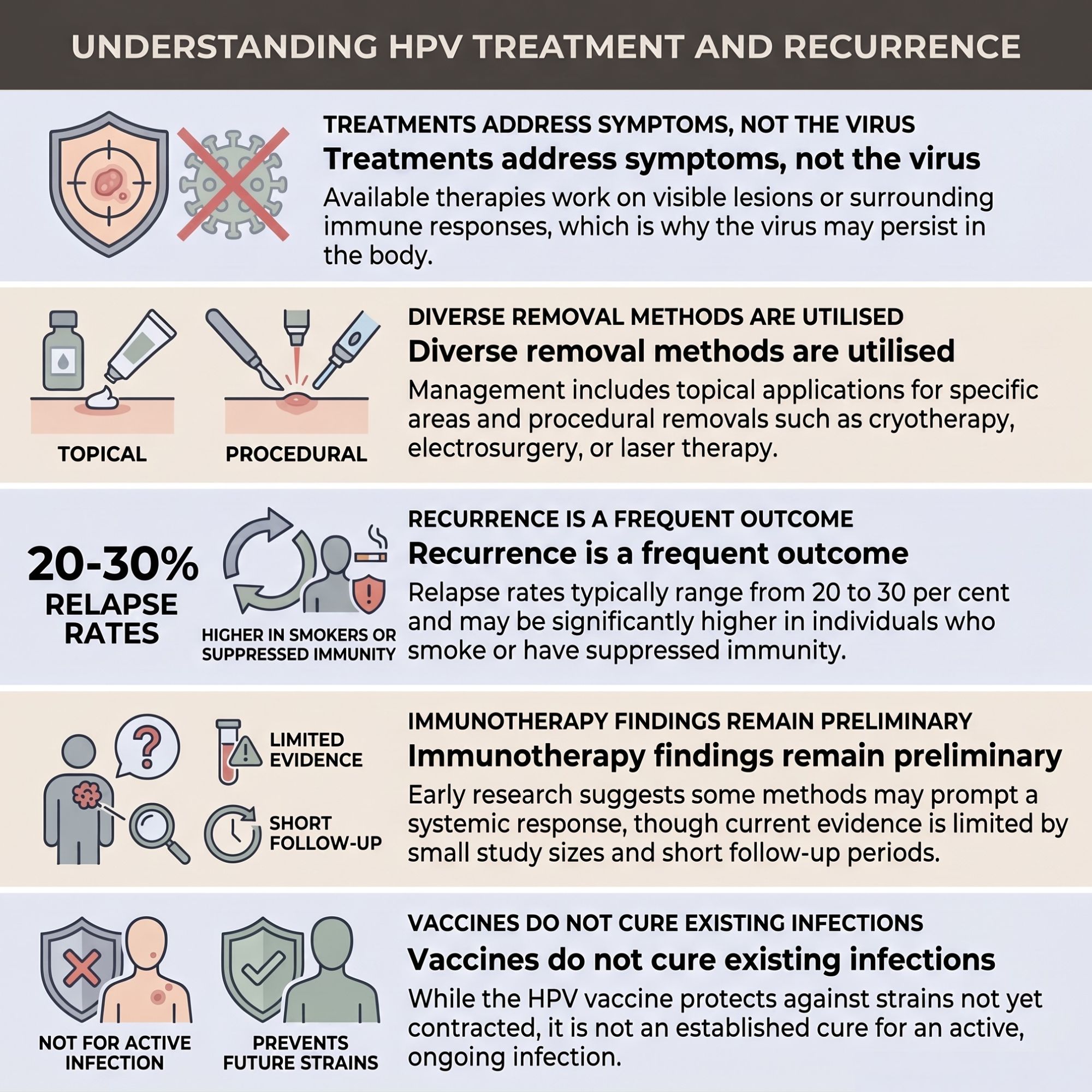
Best Way to Treat HPV Warts: What Doctors Actually Use
Topical treatments, applied directly to the lesion:
- Imiquimod, podofilox, and trichloroacetic acid for genital warts
- Salicylic acid for warts on skin
Procedural removal, faster but not necessarily more permanent:
- Cryotherapy (freezing)
- Electrosurgery
- Surgical excision
- Laser therapy
There is no single best way to treat HPV warts across the board. The right choice depends on where the wart sits, how many there are, their size, and the person’s own immune status.
Why Warts Keep Coming Back
Can Immunotherapy Help With HPV Infection?
Is the HPV Vaccine a Cure for Human Papillomavirus?
Key Takeaways
HPV infection is common, often asymptomatic, and in most cases temporary. The body clears it on its own in the vast majority of cases, usually within one to two years, with a healthy, well-functioning immune system doing the real work behind the scenes.
No treatment removes the virus directly, whether for warts, cervical changes, or anything in between. What exists targets the visible result, not the underlying infection, which is why prevention and a strong immune response matter more than any single procedure.
A resilient immune system remains the single biggest factor separating a brief, unnoticed infection from one that lingers. For a closer look at how the immune system coordinates this kind of defence, read How Do Immunomodulators Work: The Secret Conversation Inside Your Body.
FAQs
Will HPV go away on its own?
In most cases, yes. Roughly 80 to 90 percent of infections clear without treatment, typically within one to two years, as the immune system gradually brings the virus under control.
What is a high-risk HPV genotype, and how is it different from a wart-causing type?
High-risk genotypes, mainly HPV16 and HPV18, are linked to cervical and other cancers, while low-risk types like HPV6 and HPV11 cause genital warts and rarely lead to cancer. The two groups behave differently in the body and carry very different long-term risks.
What are the common symptoms of HPV in women, and how do they differ from symptoms in men?
Women are more likely to have invisible, internal changes picked up only through cervical screening, while men more often develop visible genital warts when symptoms appear at all. In both sexes, the large majority of infections cause no symptoms whatsoever.
How can you tell if you have HPV if there are no visible symptoms?
In most cases, you cannot tell on your own, since the infection rarely produces any noticeable sign. Screening tests, such as a Pap smear or HPV DNA test, remain the only reliable way to detect it.
Does testing positive for HPV mean you have an STD?
HPV is classified as a sexually transmitted infection because sexual contact is its main route of spread, but a positive result only confirms detection, not when or from whom it was acquired. It also does not require partner notification the way some other STIs do.
What are some unexpected ways of catching HPV?
Genital skin contact without penetration is enough on its own, and the virus can also pass through hand-to-genital contact or from mother to child during birth. Contaminated medical instruments are a less common, mostly indirect route.