
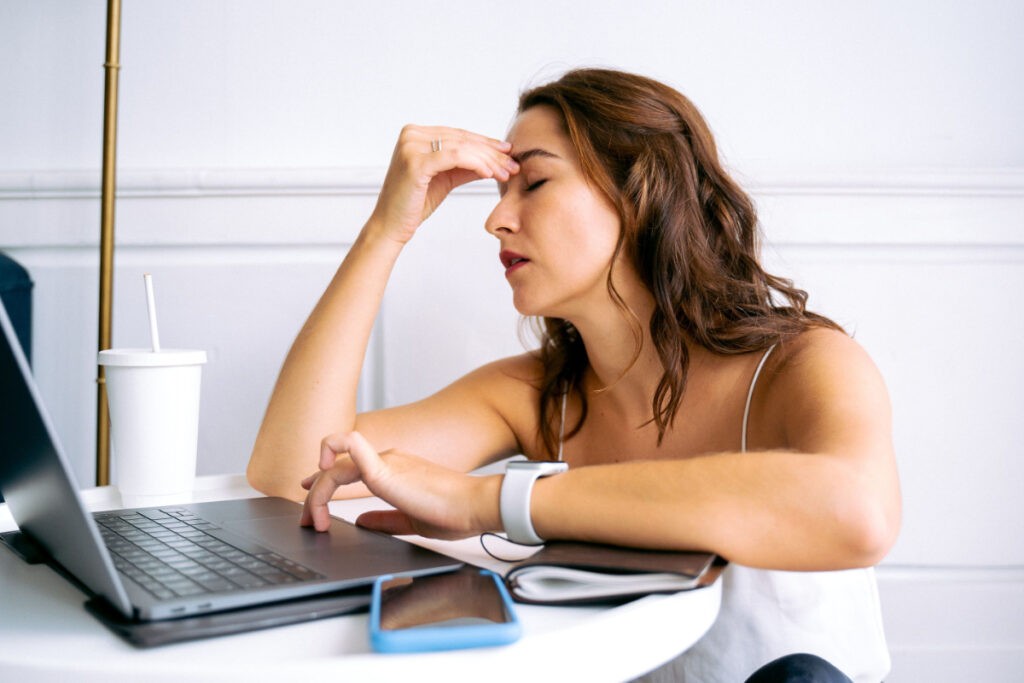
The fever has gone. You are back on your feet. Yet a trip to the shops leaves you needing the rest of the afternoon to recover. Post-viral fatigue can continue after the obvious signs of infection have disappeared. How can you tell whether your energy is returning, and what should you do if it is not?
Quick summary
- Post-viral fatigue is tiredness that continues after the acute phase of a viral illness.
- The pattern matters: notice what you can do, whether you are improving and how you feel after activity.
- Immune changes have been found in some people with prolonged fatigue, but tiredness alone cannot reveal what is happening in your immune system.
What Is Post-Viral Fatigue
Post-viral fatigue is tiredness that began with a viral infection and continues after the acute illness has passed. It can happen after flu, COVID-19, glandular fever and other viral infections. You may no longer have a fever or feel ill in the usual way, but your energy has yet to return [1,2].
There is no single day when ordinary recovery tiredness suddenly becomes post-viral fatigue. At first, a more useful question is: are you gradually able to do more, or does everyday life still leave you unusually exhausted?
You may come across several related names. Post-viral syndrome is often used when symptoms extend beyond fatigue. Long COVID refers to ongoing problems after COVID-19. ME/CFS is a separate diagnosis with a defined pattern of symptoms. Feeling tired after a virus does not mean that you have ME/CFS [1,3].
What Are the Symptoms of Post-Viral Fatigue
- routine tasks leave you unusually drained;
- concentration or remembering details takes more effort;
- sleep does not leave you feeling refreshed;
- you need longer to recover from work, household tasks or social plans [4].
What Is Your Immune System Doing After the Infection?
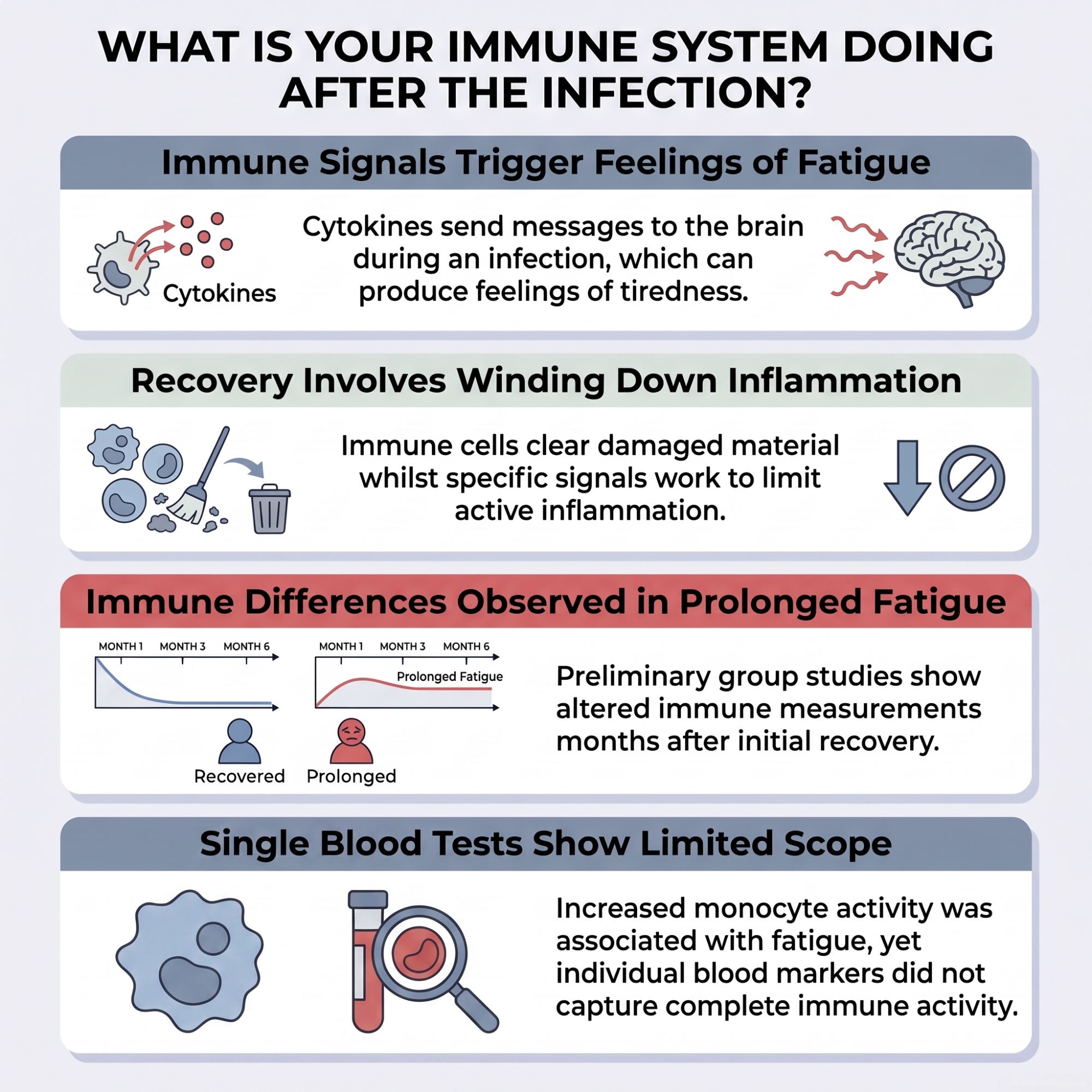
Why can a virus make you want to lie down even after you have slept? Part of the answer lies in messages sent by immune cells to the brain. These messages, called cytokines, help coordinate the response to infection. They can also contribute to that drained feeling. Researchers have produced a similar feeling of fatigue by triggering inflammation in healthy volunteers [7].
What happens once the infection is under control? The immune response has to wind down. Cells clear damaged material, while signals that limit inflammation become more active. Recovery involves this work too [8].
For some people with long-lasting fatigue, the story may continue beyond that initial recovery. A review of studies found differences in certain immune measurements months after infection when it compared people with prolonged fatigue with those who had recovered. These were findings across groups of people. They cannot tell you, from fatigue alone, what your own immune cells are doing [9].
One long COVID study found a particularly interesting detail. Greater fatigue was associated with stronger signs of activity in monocytes, a type of immune cell. Yet one inflammatory substance measured in the blood did not rise in step with fatigue. A single blood measurement did not capture the whole picture of immune activity [10].
Post-Viral Fatigue, Post-Viral Syndrome and Post-Viral Inflammation: What Is the Difference? These terms sound similar, but they describe different things:
- Post-viral fatigue is a symptom: tiredness that continues after an infection. It can occur on its own and may gradually improve as recovery continues.
- Post-viral fatigue syndrome describes a broader pattern of persistent problems. Fatigue is only one part of it. People may also experience unrefreshing sleep, problems with concentration and a marked worsening of symptoms after physical or mental effort.
- Post-viral inflammation is different again. It refers to biological processes that may continue after the acute infection, including altered inflammatory signalling and changes in immune activity. Such changes have been reported in some post-infectious conditions, but they are not present in the same way in everyone.
The distinction matters because fatigue does not prove that inflammation is still active, and persistent inflammation does not automatically mean that someone has post-viral fatigue syndrome. One describes what you feel, another describes a pattern of symptoms, and the third describes one possible biological process behind them.
How Long Can Post-Viral Fatigue Last
For some people, post-viral tiredness eases over weeks. Others continue to have difficulties for months. The name of the virus cannot give you a personal recovery date, and a mild infection does not guarantee that your energy will return quickly [1,2].
The reverse is also true: feeling exhausted for a week after flu does not mean you are heading towards a long-term condition. Studies have found different links between the severity of the first illness and later fatigue, depending on the infection and the people studied [11,12].
Recovery may be uneven, so the pattern over time is more useful than judging it by one good or bad day. Instead of trying to match someone else’s timetable, look at what has changed for you:
- Can you manage a little more than last week?
- Does an ordinary task still take the rest of the day out of you?
Post-Viral Fatigue Recovery: What Should You Track?
During post-viral fatigue recovery, a brief record can show changes that are hard to notice from memory alone. For several days, write down what you did and how you felt afterwards. There is no need to score every symptom.
Notice | Ask yourself |
Everyday tasks | Is cooking, shopping or washing easier than it was last week? |
Mental effort | Do reading, work or conversations leave me unusually drained? |
Delayed effects | Do I feel worse later that day or the following day? |
Overall trend | Am I improving, staying much the same or getting worse? |
What should you do if the same activity leaves you worse the next day? Use your notes to find the tasks that repeatedly precede a setback. Next time, try a shorter version of the task, split it into parts or leave another demanding activity for a different day. Plan rests as part of the day rather than waiting until you are exhausted.
If your symptoms remain steady, adjust what you do gradually. If they worsen, return to a level you can manage and take the delayed effect into account. A fixed daily increase is a poor guide when activity repeatedly triggers a setback [2].
When Should You Seek Help for Post-Viral Fatigue
If your fatigue is not improving, substantially limits your usual activities or comes with new symptoms, arrange a medical assessment. You do not need to wait a fixed number of months before asking for help. The infection may have been the starting point, but its timing alone cannot establish the cause of everything you feel now [1].
Anaemia, thyroid problems and sleep disorders are among the other explanations a clinician may consider. An assessment can identify a problem that needs attention instead of attributing every symptom to the earlier infection [4,3].
Bring your brief record with you. It can show when the illness began, what you can manage now and whether activity makes you feel worse later. New chest pain, fainting or significant breathlessness calls for prompt medical attention [13].
Key Takeaways
- There is no single recovery deadline. Pay attention to how your ability to manage ordinary activities changes over time.
- A delayed worsening after effort is worth noticing, even if you felt capable during the activity.
- Seek an assessment if you are not improving, your daily life remains substantially limited or new symptoms appear.
Frequently Asked Questions
Can post-viral fatigue happen after a cold or flu?
Yes. Tiredness can continue after the acute illness has passed, whether it was flu, a cold or another viral infection. Post-flu tiredness does not by itself mean you will develop a long-term condition.
Is post-viral exhaustion different from ordinary tiredness?
Post-viral exhaustion describes how severely drained you may feel after an infection; it is not a separate diagnosis. Pay attention to whether ordinary tasks remain difficult and whether activity causes a marked setback later, even if you felt capable at the time.
Can post-viral fatigue affect memory and concentration?
Yes. Mental effort can feel unusually demanding, and you may find it harder to follow a conversation or remember details. For a separate look at nutrition and cognition, see Foods Good for Brain Health: Science, Patterns and Practical Answers.
Is there a cure for post-viral fatigue?
There is no single treatment that works for everyone. A medical assessment can check for other causes of fatigue, while managing activity according to your symptoms can help you avoid repeated setbacks.
Can post-viral fatigue worsen when I return to exercise?
It can, especially if symptoms become markedly worse after exertion. If that happens, use the delayed response to guide what you do next rather than increasing exercise on a fixed schedule.
Is the immune system weakened in post-viral fatigue?
Not necessarily. Researchers have found altered immune activity in some people with prolonged fatigue, but feeling exhausted cannot tell you whether your own immune system is weakened. For a broader explanation of immune cell communication, read How Do Immunomodulators Work: The Secret Conversation Inside Your Body.