
Your body’s immune system is your frontline defence against infections and illness. When it functions properly, it protects you. But sometimes, whether from stress, age, or ongoing health challenges, it needs support to work optimally. That’s where natural immunomodulators come in. They’re plant compounds that help restore your immune response through multiple pathways at once, with lower toxicity and better tolerability for long-term use.
What Are Natural Immunomodulators? Understanding the basics
Natural immunomodulators are biological compounds found in plants, fungi, seeds, and grains that influence how your immune system functions. Unlike synthetic drugs that act very precisely on single immune targets and often produce strong systemic effects, natural immunomodulators help the body recognise and respond to challenges through several pathways at once. This broader action usually comes with lower toxicity and makes them suitable for long term use [1].
The Arsenal of Nature: Main Classes of Natural Immunomodulators
Natural immunomodulators are not a single, uniform group. They belong to several distinct chemical classes, each operating through different mechanisms. This diversity is beneficial because these compounds can work together to address various types of threats. So, what are these classes, and how do they work?
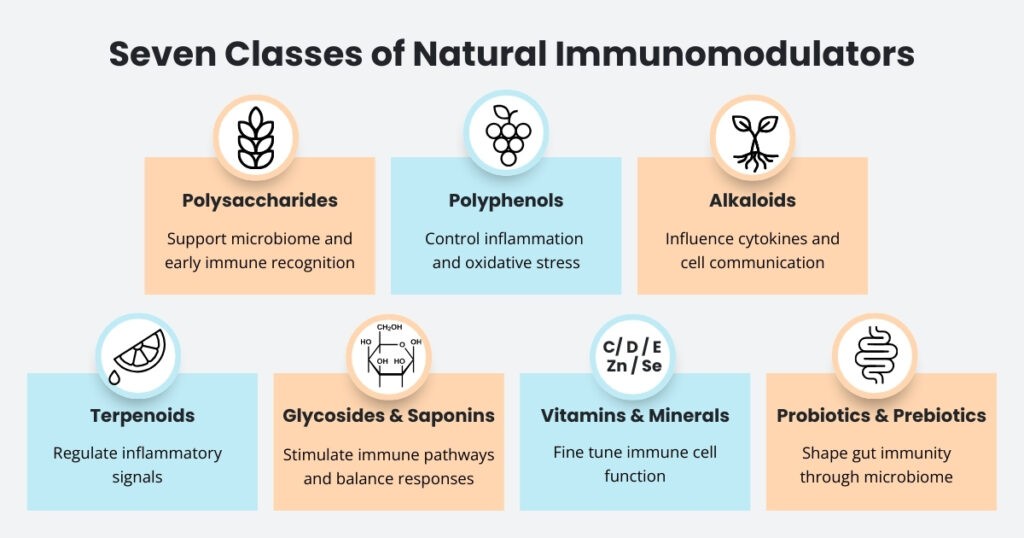
Visual summary of seven chemical classes of natural immunomodulators and their core biological functions across immune pathways.
1. Polysaccharides: Direct Immune Activation
- Polysaccharides are long chains of sugar molecules linked together. They form the structural backbone of cell walls in fungi and the outer layers of cereal grains.
- Well‑known examples include arabinoxylans from rice (e.g. BioBran MGN-3) or wheat, beta‑glucans from mushrooms and yeast, and pectins from the cell walls of fruits.
- These compounds boost the immune system by activating immune cells like macrophages, natural killer cells, and lymphocytes. They also help balance gut bacteria, which supports overall immunity [2].
| Worth Knowing: Forget what you might think – your immune system’s real headquarters isn’t in your bloodstream. It’s in your gut. When polysaccharides show up, immune cells recognize their patterns as similar to harmful invaders, and boom, your defences activate. That’s how they strengthen your immunity. |
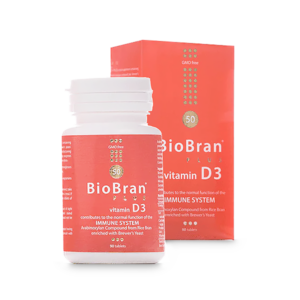
 BioBran Plus D3 combines arabinoxylan from rice bran with brewer’s yeast and vitamin D. These added ingredients, including beta-glucans, selenium and chromium, help reinforce the immunomodulating effects of BioBran.
2. Polyphenols: The Inflammation Controllers
- Polyphenols are a large family of over 8,000 natural compounds found in many plant-based foods such as fruits, vegetables, tea, and wine [3].
- Examples include flavonoids like quercetin and epigallocatechin gallate (EGCG) from green tea, curcumin from turmeric, and resveratrol from red grapes.
- They reduce excessive inflammation and protect cells from oxidative stress caused by free radicals. This dual antioxidant and anti-inflammatory action helps the immune system respond effectively without overreacting or causing tissue damage [4].
3. Alkaloids: Cellular Immune Modulators
- Alkaloids are nitrogen-containing organic compounds synthesized by plants as part of their chemical defence system. They are found concentrated in seeds, roots, and leaves of medicinal plants.
- Common examples include berberine from barberry and Oregon grape, piperine from black pepper, caffeine from coffee and tea, and quinine from cinchona bark. These alkaloids have been used for centuries in traditional medicine systems across Asia, Africa, and South America [5].
- Alkaloids help your immune cells communicate and produce more protective compounds like interferons and antibodies. They also calm inflammation and feed beneficial bacteria in your gut, which strengthens your defences overall [6].
4. Terpenoids: The Aromatic Defenders
- Terpenoids are fragrant plant molecules that give herbs, fruits, and trees their characteristic aroma and taste.
- Some of the most well-known immunomodulatory terpenoids include boswellic acids from Boswellia species, betulinic acid from birch, limonene from lemon, pinene from pine, and myrcene from hops.
- They regulate immunity by controlling cytokines, chemical messengers that balance inflammation and immune responses. Some compounds also increase white blood cells and activate broad immune actions, helping your body fight infections more effectively.
5. Glycosides, Saponins and Sterols: Multi-action molecules
- Glycosides combine sugars with other molecules, saponins are a specific type of glycosides with soap-like properties, and sterols are fat-like molecules important in cell membranes [7].
- Key examples include ginsenosides from ginseng, saponins from agave, and glycyrrhizin from licorice [8].
- These compounds modulate immunity by activating immune cells, boosting the production of protective molecules, and helping control inflammation to keep the immune system balanced and effective.
6. Vitamins and Minerals: Beyond Basic Nutrition
- Vitamins and minerals do more than just supply raw materials for your body to function. They also act as immunomodulators by fine-tuning immune activity.
- Key immunomodulatory micronutrients include vitamins C, D, and E. Among minerals, zinc, selenium, magnesium, copper, and iron play particularly important roles.
- They influence how immune cells function by regulating the production of signalling molecules and balancing inflammation. This helps the immune system respond properly to threats without overreacting, which is essential for preventing infections and autoimmune diseases.
7. Probiotics and prebiotics: Gut-Immune Allies
- Probiotics and prebiotics help shape how your immune system responds to threats by influencing the balance between friendly microbes and immune cells in the gut [9].
- Probiotics are live beneficial bacteria found in fermented foods like yoghurt, kefir, and sauerkraut. Prebiotics are plant fibres in foods like garlic, onions, and leeks that feed these good bacteria [10].
- Together, they support anti-inflammatory responses, strengthen the gut barrier, improve gut microbial diversity, and help prevent chronic inflammation and infections [11,12].
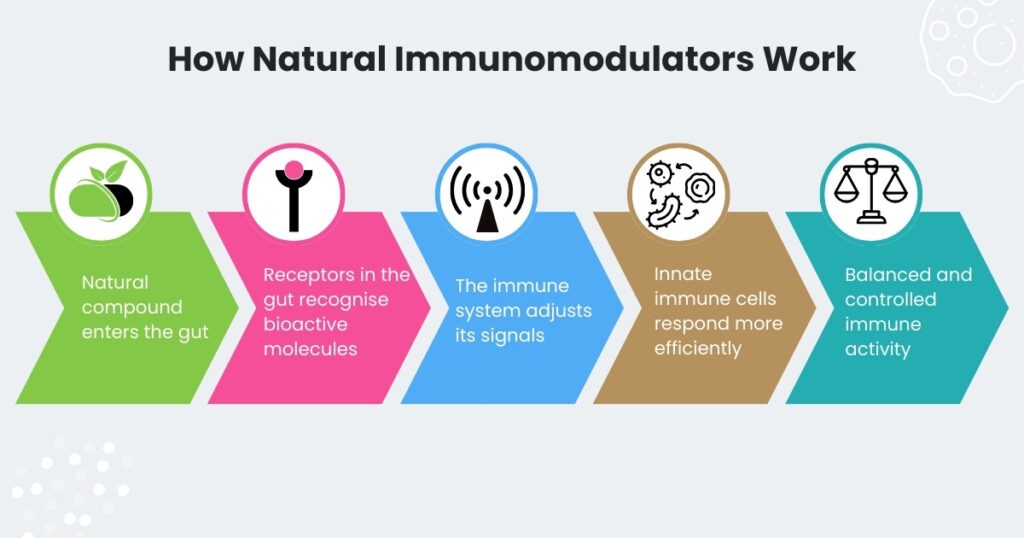
How Natural Immunomodulators Work
Arabinoxylans: Understanding a Specific Class
Among polysaccharides, arabinoxylans stand out. And for good reason. Research demonstrates they deliver both direct immune activation and broader metabolic benefits. You’ll find this specific type of polysaccharide fibre in rice bran, wheat, and rye.
It may sound similar, but arabinoxylan fibre is not the same as arabinoxylan supplements: Ordinary grain fibre mainly feeds your gut bacteria. Helpful, but that’s where it stops. Arabinoxylan supplements work differently. They undergo enzymatic processing to create molecular structures your immune cells recognize as a threat signal. Your defences activate. That’s the real win: immune protection and gut support happening at the same time. BioBran MGN-3 is one example, processed with shiitake mushroom enzymes to achieve this structure [13]. |
What you need to know about arabinoxylans:
- They wake up your immune cells (like macrophages and natural killer cells), and help them communicate with each other to mount a stronger defence.
- They act as prebiotics, and increase the production of short-chain fatty acids, which reduce inflammation and support immune function.
- They show broader biological effects, including reduced oxidative stress when compared with other polysaccharides such as beta-glucans or inulin.
- They are considered safe for long-term use, with no known adverse effects at doses of around 2 to 3 g per day.
Clinical evidence: low dose, measurable outcomes
In a randomised clinical trial involving 80 older adults taking 500 mg of Biobran daily for three months, participants experienced lower incidence of influenza-like illness, together with increased natural killer cell activity, with no reported side effects [14]. A second study [15] in a geriatric population reported similar increases in NK activity after 30 days at the same dose.
Who is most likely to benefit from arabinoxylan supplements
- individuals with weakened immune function
- people experiencing chronic inflammation
- those with metabolic disorders or type 2 diabetes, where they support glucose and lipid regulation [16].
- older adults with reduced innate immune activity
Summary
Natural immunomodulators are evidence-based tools for immune support with documented safety advantages. When used consistently and in well-characterized forms supported by clinical research, they can meaningfully enhance immune capacity. Their primary advantage is supporting immunity through multiple pathways, while remaining gentle and well tolerated.
References
- https://doi.org/10.1155/2023/7711297
- https://doi.org/10.3389/fimmu.2025.1640679
- https://doi.org/10.3390/nu10111618
- https://doi.org/10.1155/2018/1264074
- https://doi.org/10.1155/2020/1303524
- https://doi.org/10.2147/DDDT.S299120
- https://doi.org/10.1016/j.biopha.2020.110959
- https://doi.org/10.3390/molecules29010113
- https://doi.org/10.3389/fnut.2024.1355542
- https://doi.org/10.3748/wjg.v29.i14.2078
- https://doi.org/10.3389/fimmu.2021.578386
- https://doi.org/10.3389/fnut.2021.634897
- https://doi.org/10.1016/j.carbpol.2015.11.068
- https://doi.org/10.3390/nu13114133
- https://doi.org/10.3892/etm.2018.5713
- https://doi.org/10.1016/j.foodchem.2021.131106
About the author:
Maria Piknova, PhD, is a biochemist and science blogger specialising in microbiology and molecular biology. She is passionate about translating complex science into clear, evidence-based insights. [ORCID / LinkedIn]