
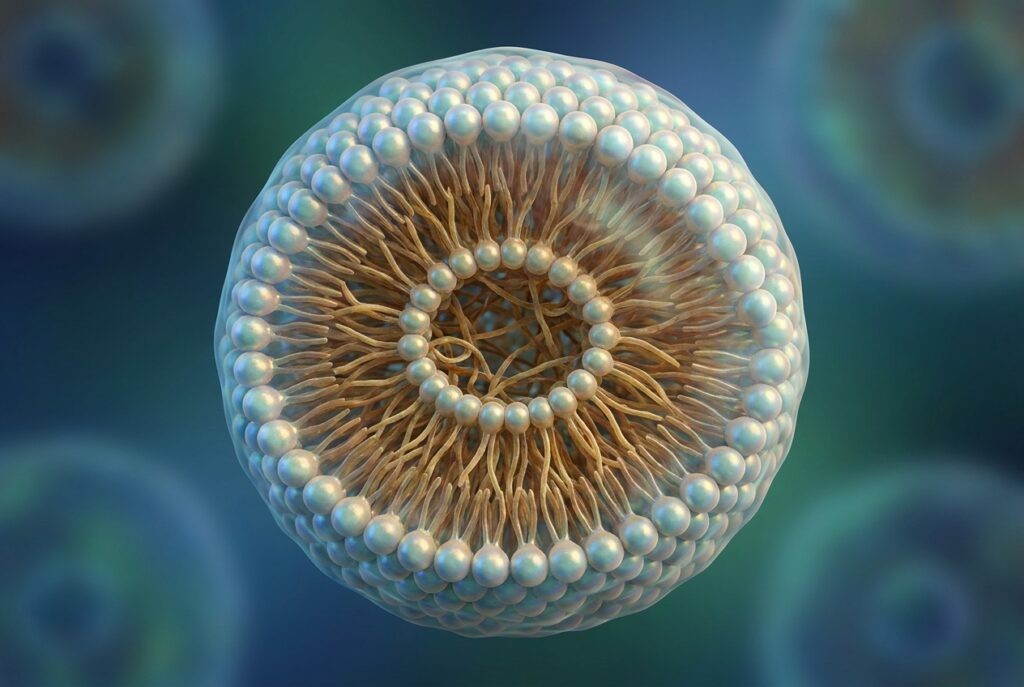
About one in every six fat molecules in your cell membranes is not an ordinary phospholipid. It carries an unusual chemical bond that changes how membranes bend, how cells protect themselves from damage, and how signals pass between neurons. That molecule is a plasmalogen, and the research around it has grown steadily over the past two decades.
Quick Summary
- Plasmalogens are a distinct subclass of phospholipids defined by a vinyl-ether bond, a structural feature absent in ordinary membrane fats.
- They make up roughly 15 to 20 percent of all phospholipids in the human body, with the highest concentrations in brain, heart, and immune cells.
- Plasmalogen levels peak around age 30 to 40 and decline with ageing, oxidative stress, and metabolic disease.
Table of Contents
What Is a Plasmalogen? Definition and Place in the Phospholipid Family

Plasmalogen Structure: What Makes These Lipids Chemically Unique
- Ethanolamine plasmalogens (PlsEtn) are the dominant form across most tissues, particularly in brain and myelin. They are the class most consistently associated with neurological conditions in research.
- Choline plasmalogens (PlsCho) are less abundant overall but significant in the heart and in blood. Studies in rats suggest they are absorbed from the gut more efficiently than ethanolamine plasmalogens.
Aspect | Ethanolamine plasmalogen (PlsEtn) | Choline plasmalogen (PlsCho) |
Relative abundance | Higher; dominant in brain and most organs | Lower; notable in heart and blood |
Main research context | Neurological membranes; linked to neurodegenerative disease | Heart, plasma, infection-related changes |
Intestinal absorption (rat data) | Lower recovery in lymph | Approximately five times higher recovery |
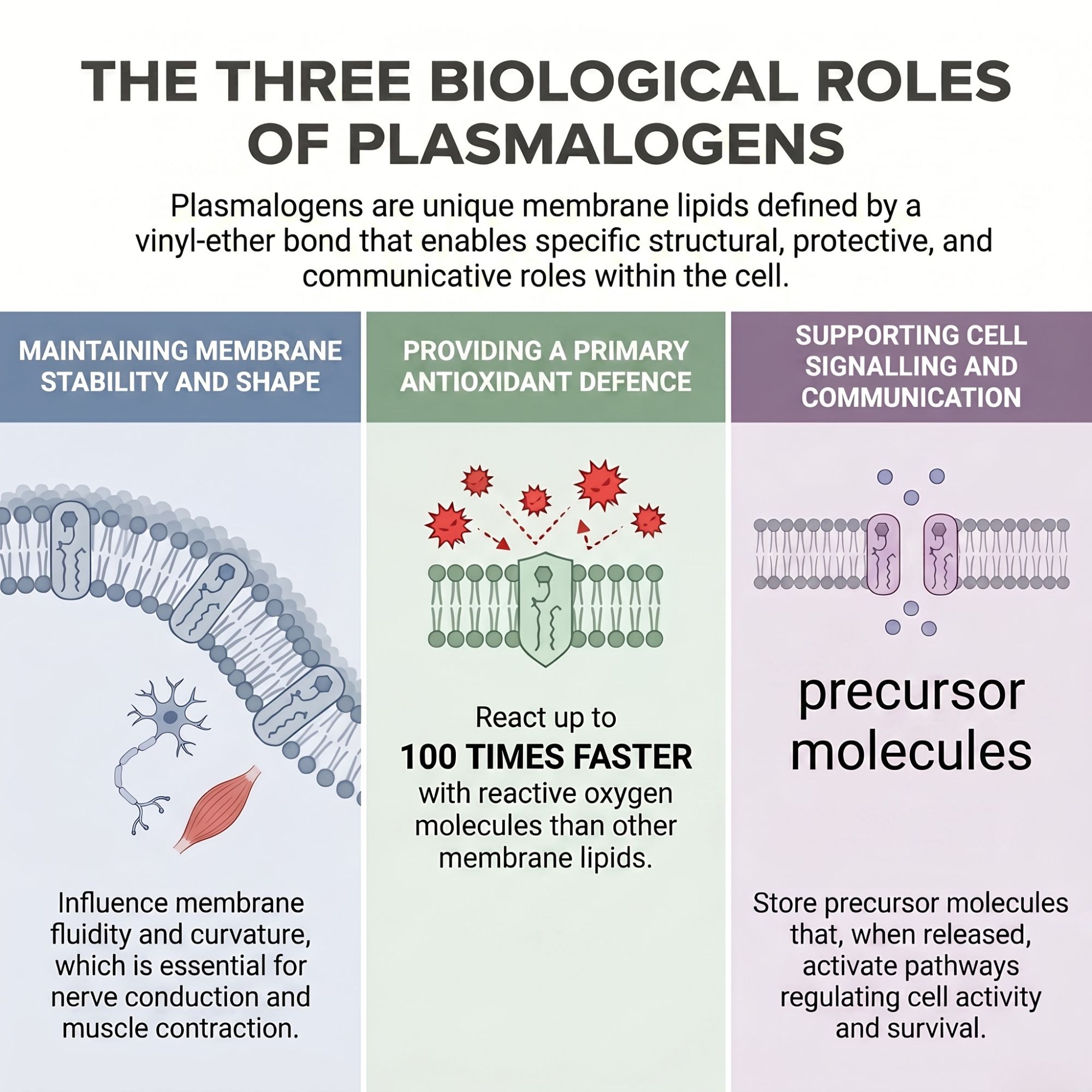
The vinyl-ether bond is also chemically reactive. It is attacked by oxidants far faster than an ester bond would be, which is the basis of the antioxidant role described in the function section below.

Where in the Body Are Plasmalogens Found?
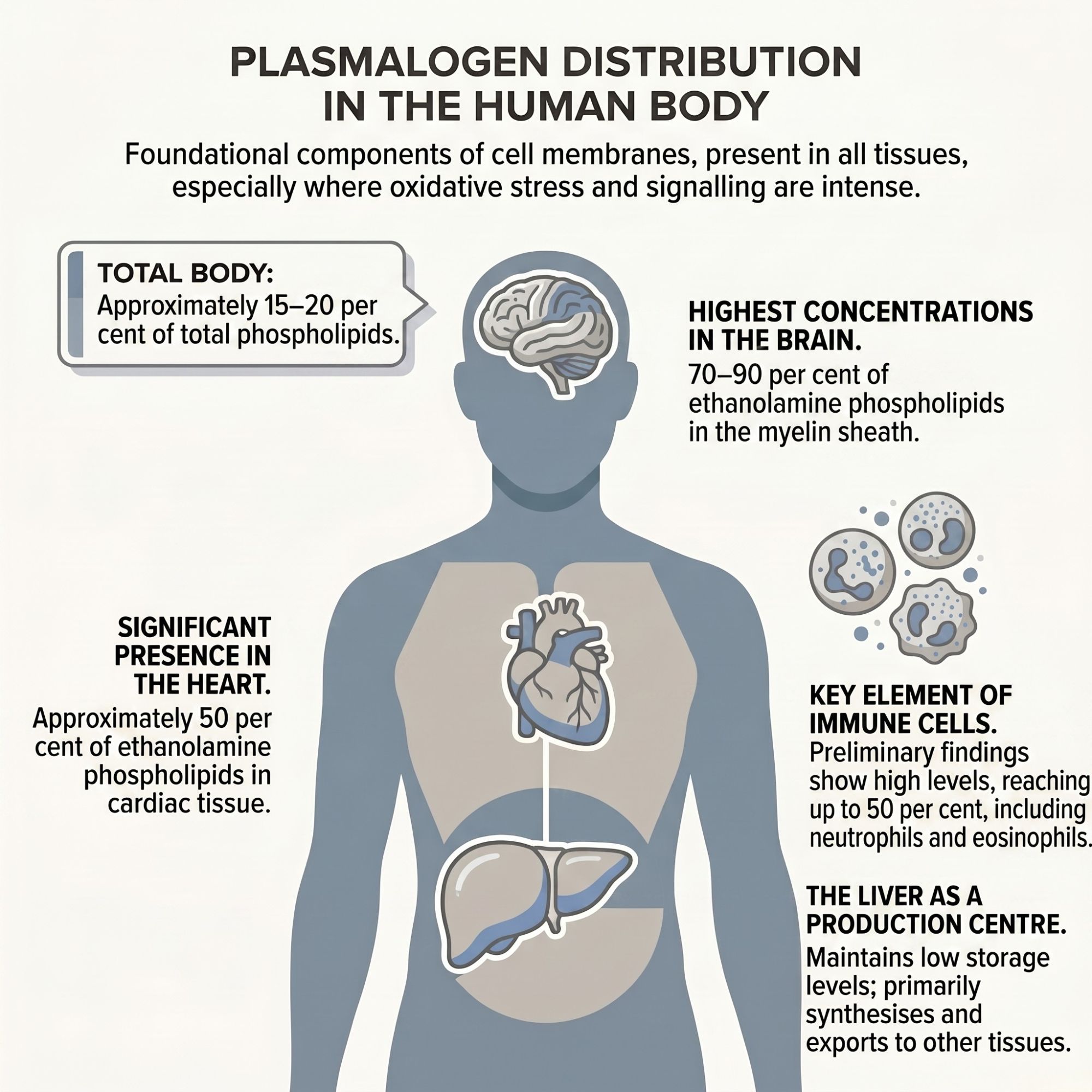
Plasmalogens are present in all human tissues but concentrate heavily where membranes face intense demands, particularly oxidative stress, rapid signalling, or structural specialisation [1].
Across all tissues combined, plasmalogens represent roughly 15 to 20 percent of total phospholipids [6,9]. Within specific phospholipid classes in certain organs, the proportions are substantially higher.
Tissue | Plasmalogen content | Notes |
Brain and myelin | Very high: up to 70 to 90% of ethanolamine phospholipids in myelin | Ethanolamine plasmalogens dominant |
Heart | High: approximately 50% of ethanolamine phospholipids | Both PlsEtn and PlsCho enriched |
Skeletal muscle | High | Similar pattern to heart |
Immune cells (neutrophils, eosinophils) | High: up to 50% of ethanolamine phospholipids | Important for immune cell activity |
Lung and kidney | High | Structural and oxidative roles |
Plasma and blood cells | Moderate | Ethanolamine plasmalogens around 50% of total PE in plasma |
Liver | Low | Synthesises and exports plasmalogens rather than storing them |
- Membrane fusion and vesicle traffic. Brain, heart, and immune cells depend on rapid membrane fusion for communication. The curved membrane geometries that plasmalogens support make this possible [10].
- Oxidative exposure. High metabolic activity in the brain, constant mechanical work in the heart, and oxygen exposure in the lungs all generate reactive molecules that can damage cell membranes. The vinyl-ether bond absorbs much of this damage before it reaches more fragile molecules [1].
- Structural specialisation. Myelin, synaptic vesicles, and lung surfactant all require precisely organised, tightly packed membranes. Plasmalogens contribute to that organisation [10].
Plasmalogen Function: How These Lipids Work in Cells
1. Structural role: shaping the membrane
2. Antioxidant role: absorbing damage before it spreads
3. Signalling role: releasing active molecules and supporting cell communication
How Plasmalogen Levels Change with Age
- Levels are relatively low at birth, around 7 percent of brain phospholipids for ethanolamine plasmalogens.
- They rise steeply during childhood and adolescence as the brain’s myelin sheath develops. They peak roughly between ages 30 and 40.
- By age 70, brain plasmalogen content is approximately 18 percent lower than at the peak.
- Circulating plasmalogens in blood show a steeper drop: elderly individuals around age 70 have roughly 40 percent lower serum plasmalogen levels than healthy young adults.
- Oxidative stress and reduced peroxisomal activity. Plasmalogens are made in small cell compartments called peroxisomes. Their activity declines with age, reducing the rate of plasmalogen production. At the same time, accumulated oxidative damage degrades the vinyl-ether bond faster than it can be replenished.
- Elevated triglycerides and metabolic disturbance. High triglyceride levels are particularly associated with lower serum plasmalogens. Type 2 diabetes and coronary artery disease are also linked to reduced circulating levels in observational data.
- Chronic inflammation. Sustained inflammatory activity consumes plasmalogens faster and is consistently associated with lower levels across multiple conditions.
- Body composition and sex. Higher BMI is generally associated with lower plasmalogen profiles. Men and women also show different trajectories for specific plasmalogen subclasses as they age, potentially linked to hormonal changes.
What Diseases Are Associated with Low Plasmalogen Levels?
Reduced plasmalogen levels appear consistently across a range of conditions, from rare inherited disorders to common age-related diseases. The sections below map the main disease categories.
Inherited disorders
Neurodegenerative diseases
- Alzheimer’s disease: Reduced ethanolamine plasmalogens are found in both brain tissue and blood. Measured deficits correlate with disease severity and cognitive test scores [22,23].
- Parkinson’s disease: Plasma and red blood cell ethanolamine plasmalogens are approximately 30 percent lower in Parkinson’s patients compared with matched controls in reported studies [24].
- Schizophrenia: Multiple plasmalogen species are significantly reduced in first-episode and recurrent patients compared with healthy controls [25].
Cardiometabolic conditions
Inflammatory and systemic diseases
Can Plasmalogen Levels Be Supported Through Diet or Supplements?
Understanding how to increase plasmalogen levels is an active area of research, and several approaches have been studied in humans.
Dietary sources
Foods that contain plasmalogens or their building blocks include:
- Meat (beef, pork, chicken): highest total plasmalogen content among common foods
- Seafood (scallops, squid, mussels): lower total amounts but richer in omega-3 plasmalogens
- Egg yolk: mainly ethanolamine plasmalogens with DHA; approximately 0.3 mg per egg
Dietary intake alone is unlikely to correct a significant deficit. The doses used in clinical trials are considerably higher than what typical food provides. For a detailed breakdown of food sources, see Foods Good for Brain Health: What Science Says.
What are plasmalogen supplements and what does the research show?
Several supplement approaches have been studied in human trials for their ability to raise circulating plasmalogen levels.
| Approach | What was measured |
| Shark liver oil (alkylglycerols) | Raised plasma and white blood cell plasmalogen levels in three weeks; also associated with reduced triglycerides and CRP [28]. |
| Synthetic precursor PPI-1011 | Oral doses raised serum ethanolamine plasmalogen levels, sustained over 14 or more days [29]. |
| DHA-alkylglycerol precursors | Dose-dependent increase in blood DHA plasmalogen levels in 22 cognitively impaired adults, alongside changes in oxidative stress markers [30]. |
| Marine-derived oral plasmalogens | Blood plasmalogen levels rose in people with MCI, Alzheimer’s, and Parkinson’s in reported trials [31]. |
Biochemical restoration of plasmalogen levels through these approaches is documented in human studies. Whether that biochemical change translates consistently into measurable clinical benefit is a separate question that current evidence has not yet fully resolved.
Key Takeaways
- A plasmalogen is a phospholipid defined by a vinyl-ether bond at the first chain position, a structural feature that distinguishes it from ordinary membrane fats.
- The plasmalogen definition in biochemistry centres on this bond and its consequences: tighter membrane packing, strong antioxidant reactivity, and a PUFA reservoir for signalling.
- Plasmalogens make up roughly 15 to 20 percent of all human phospholipids and are most concentrated in brain, heart, and immune cells.
- Their three main roles are structural (membrane architecture and lipid rafts), antioxidant (preferential absorption of oxidative damage), and signalling (release of active fatty acids and support of cell communication pathways).
- Plasmalogen levels peak in mid-adulthood and decline with age, oxidative stress, elevated triglycerides, and chronic inflammation.
- Reduced levels are documented across Alzheimer’s disease, Parkinson’s disease, coronary artery disease, sepsis, and several inherited conditions.
- Food sources and supplement approaches can raise circulating plasmalogen levels in human studies, though clinical outcome evidence remains at an early stage.
Frequently Asked Questions
What are plasmalogens and what are they made of?
Plasmalogens are a subclass of phospholipids, the fat molecules that form cell membranes. They are built from a glycerol backbone with two fatty acid chains and a polar head. What makes them distinct is the first chain, which is attached by a vinyl-ether bond instead of the usual ester bond. The second chain typically carries a polyunsaturated fatty acid such as DHA or arachidonic acid.
What distinguishes a plasmalogen from other glycerophospholipids?
The defining feature is the vinyl-ether bond at the first chain position. Ordinary glycerophospholipids carry an ester bond at that position. This single structural difference changes how the membrane packs, how it responds to oxidative stress, and how it supports cell signalling.
What is choline plasmalogen?
Choline plasmalogen is one of the two main plasmalogen types, defined by its choline headgroup. It is found in significant amounts in the heart and blood. The other main type, ethanolamine plasmalogen, dominates in brain and most other tissues.
Where is plasmalogen found in the body?
Plasmalogens are present in all human tissues but are most concentrated in the brain and myelin, heart, skeletal muscle, immune cells, lung, and kidney. The liver has the lowest plasmalogen content among major organs.
What is plasmalogen synthesis?
Plasmalogen synthesis is a two-stage process. It begins in peroxisomes, small compartments inside cells, where the vinyl-ether backbone is assembled. The molecule is then passed to the endoplasmic reticulum, where the final structure is completed. When peroxisomes are defective or poorly functioning, plasmalogen production is reduced across multiple tissues.
What supplements have been studied for raising plasmalogen levels?
Several approaches have been investigated in human studies, including shark liver oil rich in alkylglycerols, marine-derived plasmalogen extracts, and synthetic precursor compounds. These have been shown to raise circulating plasmalogen levels in clinical studies. Cogni8, a plasmalogen supplement sourced from Japan, is available at DHD Europe.