Flu Prevention: A Science-Based Layered Approach

Boosting immunity during flu season is like a puzzle with many small, interconnected pieces. Researchers continue to explore how daily habits and underlying immune factors shape our vulnerability to infection. These insights help explain why some people stay well while others fall ill. And they offer a clearer, more grounded view of what effective flu prevention can look like.


Why Flu Prevention Needs More Than One Strategy

When winter arrives, so does the annual question: how do you stay healthy when everyone around you seems to be sniffling and coughing? The answer lies partly in your immune system’s remarkable ability to defend you from viral invaders. 

But here’s the thing: your immune system isn’t like a light switch you can simply turn on or off. It’s more like a sophisticated security system that requires proper maintenance and support to function at its best. Scientific research has identified three main pillars for effective influenza prevention

  • annual vaccination
  • antiviral therapy
  • immune system strengthening through specific nutrients and plant-based compounds 

Of these, vaccination remains the gold standard. Updated yearly to match circulating virus strains, the seasonal flu vaccine is recommended for all individuals aged six months and older [1,2,3]. 

However, even vaccines aren’t perfect. Sometimes viral mutations reduce their effectiveness in certain seasons which is precisely why a multi-layered approach to flu prevention makes such good sense [4].

Natural immune boosters for cold and flu supported by research

Only a few groups of natural compounds show meaningful effects in cold and flu prevention. These include:

  • vitamins and minerals such as vitamin C, vitamin D and zinc
  • herbal preparations including Echinacea, garlic, ginseng and thyme
  • probiotics that influence gut-mediated immune responses
  • polysaccharides and natural immunomodulators such as arabinoxylans
  • plant phytochemicals like green tea catechins and flavonoids

These categories differ in strength and type of evidence, which the following sections explore in more detail.


Vitamin C – popular but limited benefits

Vitamin C supplements show only slight benefits for preventing colds once you are already at risk [5]. This often surprises people because high dose vitamin C has a strong cultural reputation as an immunity essential. However, studies consistently show that unless you are under extreme physical stress, such as an athlete running marathons in winter, supplementation will not significantly reduce the likelihood of catching a cold or flu.

Even so, vitamin C remains important for immune function because it contributes to antioxidant defence and helps immune cells operate efficiently. The practical takeaway is simple. Focus on meeting your daily needs through a diet rather than relying on vitamin C supplements for real flu protection. Citrus fruits, berries and peppers are reliable sources that help maintain baseline immune health [6].

People also read:


Zinc – the natural cold-shortener

Zinc presents a very different picture. When taken within the first 24 hours of cold symptoms, zinc lozenges can shorten illness duration and reduce overall severity. A meta-analysis showed that zinc reduced the length of a cold by roughly two days, which is a meaningful difference when you are already feeling unwell [7]. The key parameters for zinc supplementation:

  • daily zinc doses below 75 mg show no effect
  • zinc acetate formulations show the strongest evidence
  • start within 24 hours of symptom onset
  • lozenge form appears more effective than tablets or syrup

Importantly, zinc is most useful as a treatment, not as prevention. Data on taking zinc before you get sick remain inconsistent [8].


Vitamin D and flu – the immunity nutrient that actually matters

Vitamin D is one of the few nutrients with clear and consistent evidence for reducing respiratory infections, especially if your baseline levels tend to run low [9]. The practical implications:

  • individuals who are very vitamin D deficient (with levels below 25 nmol/L) benefit most from supplementation
  • daily or weekly dosing appears more effective than occasional large doses
  • standard recommendations suggest 1000–2000 IU daily for most adults
  • testing your vitamin D level (25-hydroxyvitamin D blood test) can guide your approach
  • many people, especially in northern climates during winter, are naturally vitamin D deficient


👉 See BioBran Plus D3


Herbal remedies for cold and flu

Herbal products represent perhaps the most misunderstood category of immune support. Traditional use does not guarantee efficacy, but some traditional plants do have genuine scientific backing. Well-studied plants relevant to respiratory infections:

  • Echinacea may shorten cold duration and symptom severity, though results are mixed and depend on species and extract type [10]
  • Garlic and aged garlic extract enhance natural killer cell activity and may reduce infection severity [11]
  • North American ginseng shows potential for lowering the incidence of flu-like illnesses in high-risk populations [12]
  • Thyme, peppermint and honeysuckle contain compounds with documented antiviral mechanisms [12]
  • Green tea catechins may inhibit viral replication, though clinical trials remain inconsistent [13]


Probiotics and gut health in cold and flu prevention

Your gut is not just responsible for digestion. It contains roughly 70 percent of your immune system’s cells. The bacteria living in your gut essentially train your immune cells to respond more effectively to viral threats. Probiotics offer indirect yet valuable support for respiratory immunity by influencing the gut–immune axis. Key findings from research include [5,14]:

  • Lactobacillus strains can reduce the frequency of upper respiratory infections 
  • probiotics increase secretory IgA, a key class of antibodies involved in mucosal defence
  • certain strains boost interferon gamma production, a key antiviral immune molecule
  • benefits require consistent use, not occasional supplementation


Worth Knowing: Probiotics are not direct antivirals. Instead, they train your entire immune system to respond more effectively. This is why consistency matters. You need ongoing consumption to maintain the effect, not just a dose when you feel illness coming on.


Arabinoxylans as natural immunomodulators

Arabinoxylans are natural compounds found in cereal grains, particularly rice bran. They act as gentle immunomodulators that help boost the immune system without overstimulating it. Here is what scientific research on arabinoxylans suggests: 

  • oral arabinoxylans can enhance the activity of macrophages and natural killer cells, making early antiviral responses more efficient [15]
  • they influence both innate and adaptive immunity by promoting T and B cell activity (the cells responsible for your body’s long-term memory against pathogens) [16]
  • they may reduce the incidence of common colds in older adults, with some evidence suggesting improved response to influenza vaccination [14]
  • they drive shifts in gut microbiota composition that are associated with improved antiviral immune responses [17]


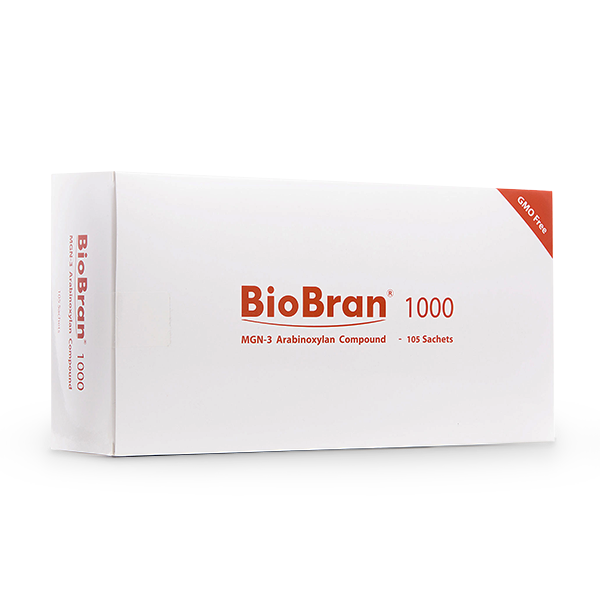
Looking for natural immune support during flu season? A promising choice is BioBran/MGN-3, one of the most studied arabinoxylans. Early experimental and clinical research shows that it modulates the immune response through multiple complementary mechanisms. Specifically, it can reduce viral load, interfere with viral entry into host cells and activate key antiviral defence pathways [18]. Although more large-scale human trials are needed, BioBran/MGN-3 remains a promising option to consider, particularly for high-risk groups such as older adults and people with weakened immune function [18,19].

👉 Explore Biobran 250 – 50 tablets – MGN-3, BioBran Plus D3.


How to Prevent Flu and the Common Cold: A Realistic Layered Strategy

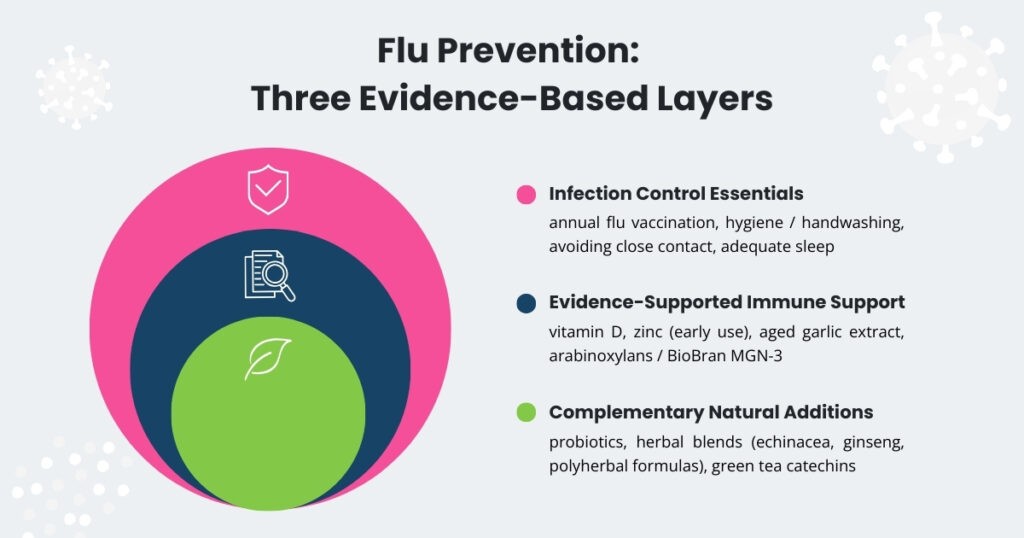
You cannot make your immune system invincible. What you can do is support its core functions with several complementary approaches. A realistic flu prevention plan has three layers:


Layer 1: The foundation

  • annual flu vaccination from September to November
  • consistent handwashing and respiratory etiquette
  • avoiding close contact with sick individuals during peak season
  • adequate sleep, since sleep deprivation directly weakens immune responses


Layer 2: Stronger evidence

  • Vitamin D: 1000–2000 IU daily (more if clinically deficient)
  • Zinc: keep lozenges on hand for use within 24 hours of symptom onset
  • Aged garlic extract: helpful for those in high-risk groups or with frequent infections
  • BioBran MGN-3: particularly relevant for older adults or people with weakened immune function (we recommend BioBran Plus D3)


Layer 3: Promising additions

  • Probiotics: regular intake to maintain gut-mediated immunity
  • Herbal blends: Echinacea, ginseng or polyherbal formulas if you prefer plant-based approaches
  • Green tea: consistent consumption for catechins linked to antiviral activity

About the author: 

Maria Piknova, PhD, is a biochemist and science blogger specialising in microbiology and molecular biology. She is passionate about translating complex science into clear, evidence-based insights. [ORCID / LinkedIn]


HEAD OFFICE

DHD(Europe)Ltd.,
Wellington House, East Road,
Cambridge CB1 1BH UK

BRANCH OFFICE

DHD(Europe)Ltd.,
Podjavorinskej 4,
811 03 Bratislava, Slovakia

CONTACT US

+421 2 5463 0314

info@dhdeurope.com

DHD (Europe)’s mission is to deliver science‑based natural supplements that support people’s health while protecting the planet for future generations. By aligning with Daiwa Pharmaceutical’s philosophy of respecting nature and advancing bioscience, DHD Europe strives to source responsibly, minimise its environmental footprint, and promote sustainable wellness solutions across Europe.

Important information

Categories

Our Payment Partners :

Copyright © 2023 DHD Europe Ltd. . All Rights Reserved.

Add to cart