

Have you ever known a word but could not bring it to mind at the right moment? In a new clinical trial, healthy adults aged 40 or older who took scallop-derived plasmalogens for 12 weeks remembered words better in a computer test than those who took a placebo. The result has brought an unusual type of fat found in brain cell membranes into the spotlight.
Why Study Memory Before There Is a Diagnosis?
The new study focused on a familiar grey area. The participants did not have dementia or another diagnosed memory disorder. Yet when they completed a test of verbal memory, their results were below average for their age [1].
What exactly is verbal memory? It is the part of memory you use for words. It helps you remember a new name, recall something you have read or hold on to details from a conversation.
That makes the study relevant to people who are generally healthy but feel that words and new information no longer stay in their memory quite as easily as before. A weaker result in one memory test is not the same as a diagnosis. It can, however, show a subtle difference that a broad screening test may miss [2].
Earlier plasmalogen studies mainly involved people with mild cognitive impairment or Alzheimer’s disease. This trial asked a different question: could a difference also be detected in adults who were still considered cognitively healthy?
What Did the Researchers Actually Test?
The researchers compared 1 mg of purified scallop-derived plasmalogens with a placebo over 12 weeks. A placebo looks like the tested supplement but does not contain its active ingredient.
The trial was randomised and double-blind [1]. Participants were placed into the groups by chance, and neither they nor the study staff knew who was taking which capsules until the study had ended. This helps prevent expectations from influencing the result.
Study feature | What it involved |
Participants | 68 healthy Japanese adults aged 40 or older were placed into two groups, and 66 were included in the final comparison |
Starting memory | Verbal memory was below average for their age |
Tested preparation | 1 mg of purified plasmalogens from the scallop Mizuhopecten yessoensis each day |
Comparison | identical capsules without plasmalogens |
Duration | 12 weeks |
Main question | did the groups perform differently in verbal memory? |
The participants completed a set of computer tasks called Cognitrax. These looked at several abilities, including memory, attention, reaction time and reasoning. The researchers decided in advance that verbal memory would be their main result.
So, what happened after three months?
The Group Taking Plasmalogens Remembered More Words
After 12 weeks, the age-adjusted verbal memory score was about 10 points higher in the plasmalogen group than in the placebo group, after the participants’ starting scores had been taken into account.
But what do those points mean?
The scores are adjusted for age, and a score around 100 represents the average for people in the same age group. At the beginning, both groups were close to 79, which was below that average. After 12 weeks:
- The plasmalogen group: reached a score of about 100.
- The placebo group: reached a score of about 89.
A higher number simply means that the participants did better at remembering the words used in the test. Both groups improved, but the increase was greater in the group taking scallop-derived plasmalogens.
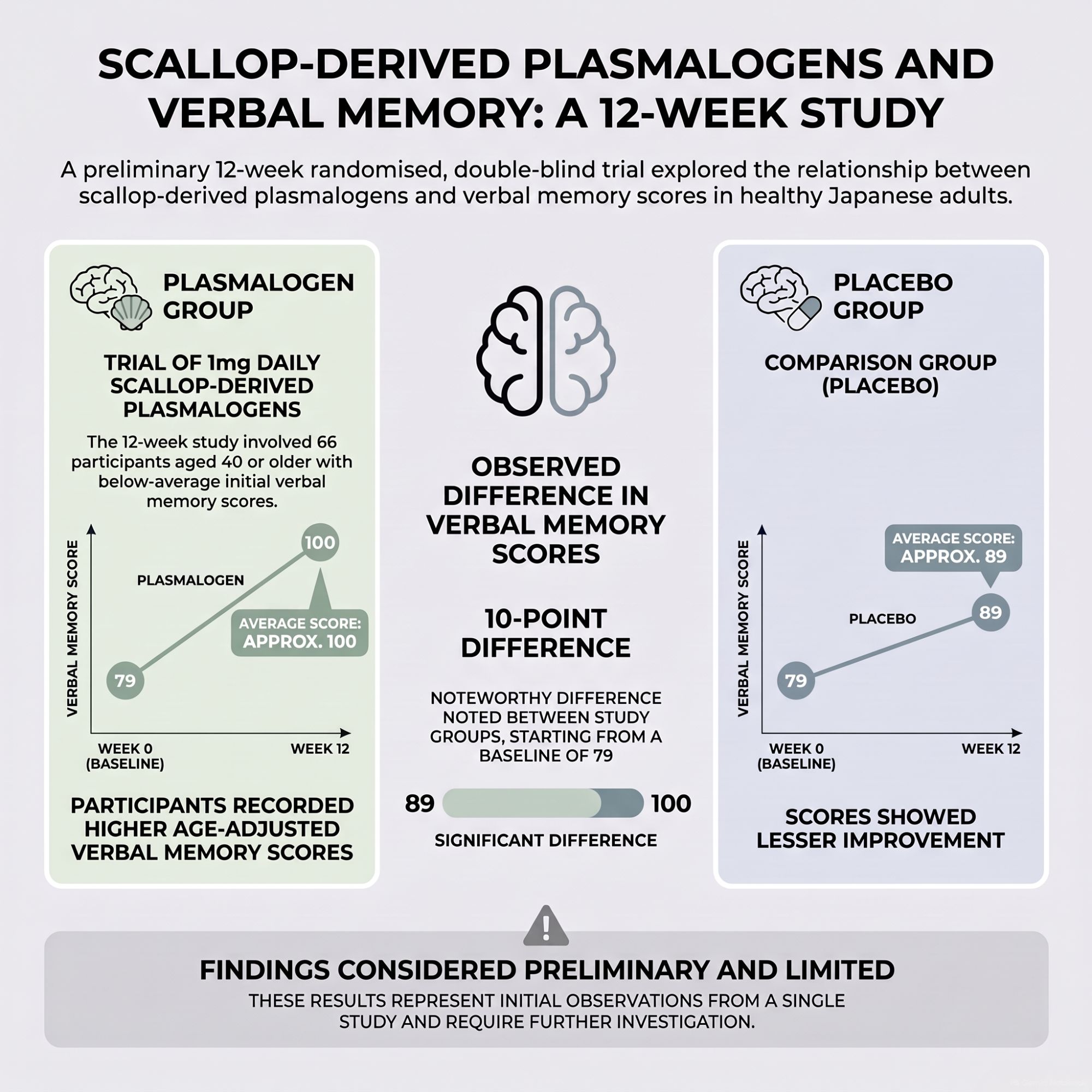
This is what makes the result interesting. The average score in the plasmalogen group moved from below average to approximately the expected level for their age. The difference was also statistically significant, suggesting that it was unlikely to be explained by chance alone.
The obvious next question is why a substance extracted from scallops might be connected with memory at all.
What Are Scallop Plasmalogens?
Plasmalogens are specialised fats that form part of the thin outer layer surrounding our cells. They are especially common in tissues that rely on rapid communication, including the brain [3].
Scallop plasmalogens are plasmalogens extracted from scallop tissue. The preparation in this trial mainly contained a type called ethanolamine plasmalogens, which are also abundant in the membranes of nerve cells.
That is enough chemistry for now. If you want a closer look at their structure and roles in the body, see what plasmalogens are.
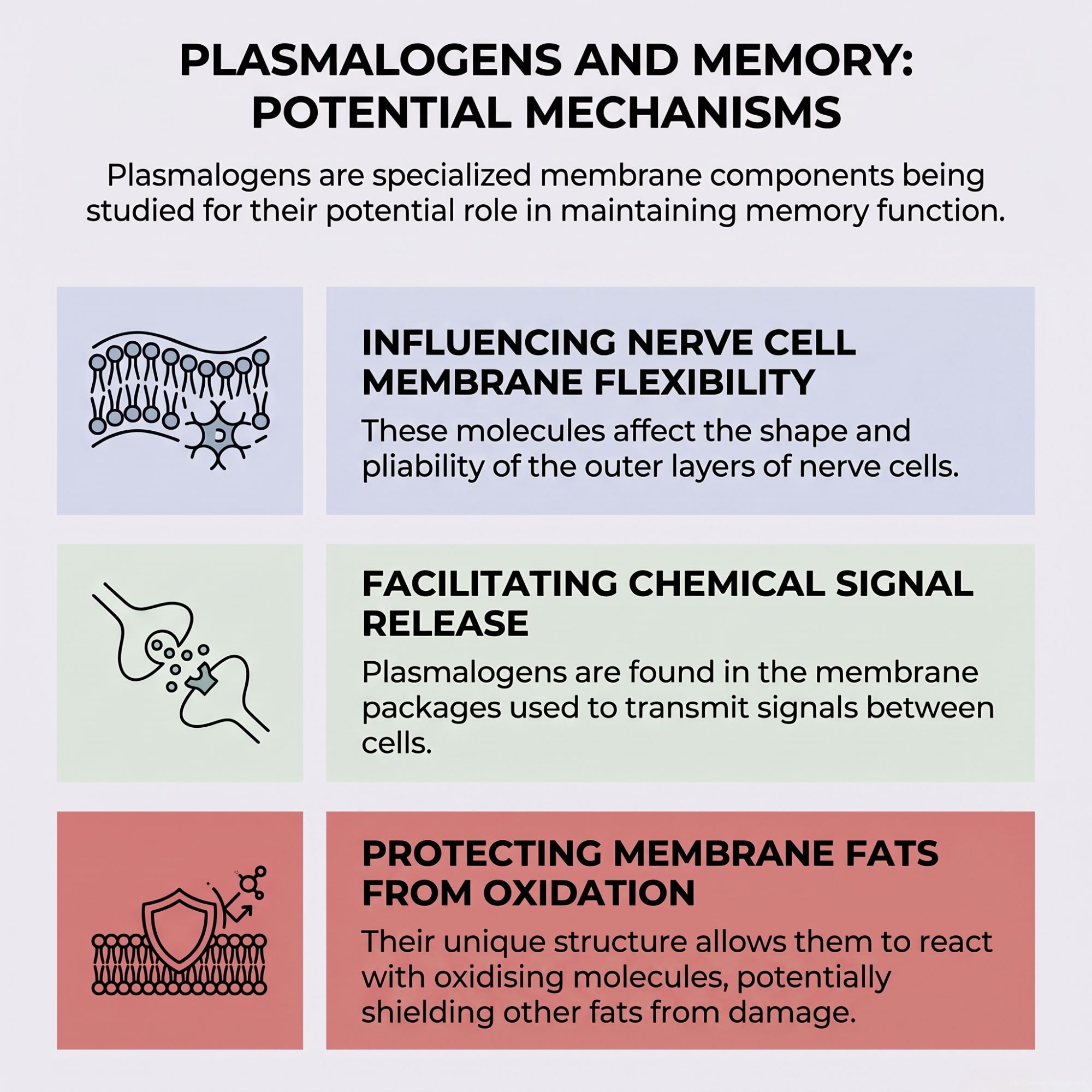
Why Might Plasmalogens Be Relevant to Memory?
- Cell membrane structure: they influence the flexibility and shape of nerve cell membranes [4].
- Communication between nerve cells: they occur in the small membrane packages used to release chemical signals [5].
- Protection of membrane fats: their unusual chemical structure allows them to react readily with oxidising molecules, which may help protect other fats in the membrane from damage [3].
Have Other Plasmalogen Trials Found Something Similar?
Previous trials have also reported memory-related findings, although they have not all tested the same people or the same preparations.
A 12-week study in healthy adults who described mild forgetfulness found a greater improvement in a combined verbal and visual memory result after taking plasmalogens extracted from sea squirts [6].
Another trial in healthy older adults reported differences in selected memory tasks after participants took a product containing both plasmalogens and tuna-derived elastin. Because it was a combined preparation, it is impossible to tell how much each ingredient contributed [7].
Research in people with mild cognitive impairment or Alzheimer’s disease has produced less consistent results. It also answers a different question from the new trial in healthy adults. You can explore that evidence separately in plasmalogens and dementia.
Taken together, the studies do not yet give a final answer. They do show that the latest finding did not appear in complete isolation.
What Does the Study Mean for Plasmalogen Supplements?
The trial makes scallop-derived plasmalogens an interesting ingredient to follow, especially because the researchers tested a clearly defined daily amount in a placebo-controlled study.
Does that mean every plasmalogen supplement can be expected to produce the same result? Not automatically. Products carrying the same general ingredient name may still differ in:
- Source: where the plasmalogens come from.
- Amount: how much the daily serving provides.
- Composition: which individual plasmalogen forms are present.
- Processing: how the ingredient was extracted and prepared.
The body can also alter plasmalogens during digestion and absorption. This means it is worth looking beyond the word “plasmalogen” on the label and checking what the product actually contains [8, 9].
What Should We Keep in Mind?
The study offers a promising memory result, but it is still one relatively small trial. The main points to keep in perspective are:
- The group was specific: the result came from 66 healthy Japanese adults who began with below-average verbal memory.
- The study was short: it lasted 12 weeks, so we do not know whether the difference continues over longer periods.
- The finding was narrow: verbal memory differed between the groups, but overall cognitive performance did not.
- Funding and transparency: the company that supplied the tested capsules also funded the trial. According to the paper, the funder was not involved in the study design, data collection, analysis, interpretation or preparation of the manuscript.
No adverse events or clinically meaningful safety concerns were reported during the 12 weeks. This provides useful short-term information about the preparation tested, but not evidence of long-term safety [1].
What Can We Take From the New Study?
- The main result was clear: adults taking scallop-derived plasmalogens performed better in a word-memory test than those taking a placebo.
- The change was easy to see on the test scale: the group average moved from below average to approximately average for the participants’ age.
- The finding fits a plausible biological story: plasmalogens are part of the membranes that nerve cells use for communication.
- The evidence is developing: the result now needs to be repeated in larger and longer studies.
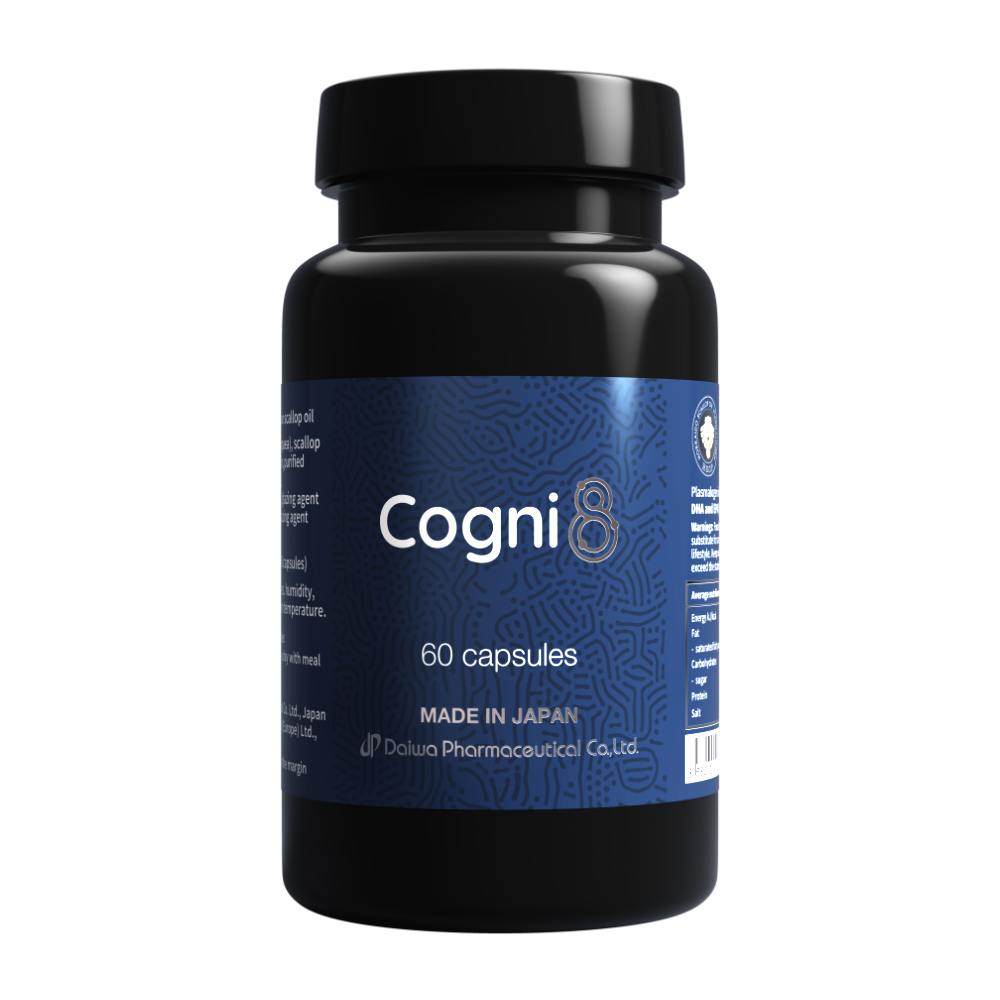
Scallop plasmalogens have moved from an interesting biological idea to an ingredient tested in healthy adults under controlled conditions. If you are looking for a supplement containing scallop-derived plasmalogens, you can view the full formulation and product details for Cogni8.
Frequently Asked Questions
What is a scallop plasmalogen?
A scallop plasmalogen is a specialised fat extracted from scallop tissue. Plasmalogens occur naturally in cell membranes and are especially abundant in the brain. A broader explanation is available in What Are Plasmalogens?.
What Is the Connection Between Plasmalogens and Dementia?
Studies have found lower plasmalogen levels in people with Alzheimer’s disease and mild cognitive impairment. Could this change begin before symptoms appear? See what the research suggests in Plasmalogens and Dementia.
Are all scallop-derived plasmalogen supplements the same?
No. They may differ in their source, daily amount, composition and processing, so the result from one formulation cannot automatically be applied to every product. You can view these details for Cogni8.
What does plasmalogen therapy mean?
The term “plasmalogen therapy” is sometimes used informally for supplements or experimental approaches involving plasmalogens. The evidence is still preliminary, so plasmalogen supplements cannot currently be considered a medical treatment.
Which foods are naturally rich in plasmalogens?
Plasmalogens occur in several animal-derived foods, although their amounts and forms vary between sources. Plasmalogen-Rich Foods: Natural Dietary Sources looks more closely at where dietary plasmalogens come from.
Do nuts contain plasmalogens?
No. Plasmalogens are not found in plants, so nuts are not a natural dietary source. Nuts are studied in connection with cognitive function for different reasons. Nuts as Brain Food: A Closer Look at the Data examines what the evidence shows.